Tuesday, 12 May 2020
Monday, 11 May 2020
Yoga Exercises To Get Your Thighs And Hips In Shape
Natarajasana
Benefits – The hip flexors are stimulated and stretched in this very graceful posture. Both the inner and outer thigh muscles are worked upon. This asana strengthens the legs as the body balances on one leg. Right from your pelvis to your feet, every muscle in your leg is toned and stretched. Your hips are opened up, and all the energy blocks in the legs are released. The blood circulation in your legs is enhanced, which gives a fresh flow of oxygen and nutrients to them.
Ustrasana
Benefits – This asana brilliantly opens your pectoral
muscles and gives strenght to the hip flexors. It also tones all the
limbs, especially the thighs. This asana works on the front part of your
body, so the muscles in the frontal thighs get thoroughly toned and
stimulated.
Janu Sirsasana
Benefits – The Janu Sirsasana works towards increasing
the flexibility in the hamstrings and its subsets whilst toning the
thighs and hip joints. Besides that, the leg muscles are stretched,
there is a greater stretch on the back and spine, which contributes to
an increase in the circulation of blood in these regions. This nourishes
the muscles and keeps the area healthy. This asana helps to strengthen
the legs too, and if done for a prolonged period, calms the mind as
well.
Navasana
Benefits – When you practice this asana regularly, it moves beyond your body, i.e., the organs, nerves, bones, and muscles, and penetrates into the very core of your being. As you balance your body weight on your buttocks, your being trembles initially. But, a whole lot of strength and determination is built within the few seconds of suspension. There is a great improvement in blood circulation, and your legs get a good stretch.
Salabhasana
Benefits – This is an effective yoga exercise that addresses the posterior spine while adding ‘lifting’ capabilities in the legs and to tone or shape up the glutes. It also works on many other parts of your body. It strengthens your legs and enhances the flow of blood. Your hips and thighs (legs, in general) remain strong, flexible, and in good health.
Setu Bandhasana
Benefits – This asana enhances the circulation of blood. The raised hips enforce a good stretch. The muscles are stimulated and toned, and any energy is broken and released.
Friday, 24 April 2020
Simple Yoga Exercise To Reduce Belly Fat
.Tadasana (Mountain Pose)
Tadasana is an ideal warm-up pose. It improves blood circulation and activates the core and other peripheral areas , thereby ensuring that your body is ready for the other poses in store.How To Do
- Stand with your feet flat, heels slightly spread out, and the big toes of your feet in contact with each other. Keep the spine erect with hands on both sides and palms facing your body.
- Stretch your hands to the front and bring the palms close to each other.
- Inhaling deeply, stretch your spine. Raising your folded hands up above your head, stretch as much as you can.
- Try lifting your ankles and standing on your toes, with the eyes facing the ceiling. If you cannot stand on your toes, you can keep your feet flat on the ground, while your eyes face the ceiling.
- Breathe normally and hold the pose for 20 to 30 seconds.
- Inhale deeply, and while exhaling, slowly relax and bring your feet back to the floor.
- Repeat the asana 10 times, increasing the count gradually. Relax for 10 seconds before you attempt the next repetition. The picture given above is a variation for beginners.
. Surya Namaskar
Surya Namaskar is a confluence of twelve yoga positions, each of which has a major impact on the entire body. The forward and backward bends allow stretches, while the deep breathing performed during the act helps in detoxification. Practice Surya Namaskar daily in the morning, facing the sun, for reaping the maximum benefits.How To Do
- Stand with both your feet together, expand your chest, and relax your shoulders.
- As you inhale, lift both your arms from the sides. And as you exhale, bring your arms to the front of your chest and keep them in the prayer position.
- Inhale, raise your hands, and stretch backwards, slightly.
- Exhale, bend forward, and try to touch your forehead to the knees.
- Bending your left knee, stretch your right leg backward, with your palms placed on the floor.
- Move into downward dog position.
- From Adhomukha (downward dog), coming on the tips of the toes, move forward in an Ashtanga Namaskar (a form of Chaturangadandasana), where the hips are slightly elevated and take the entire torso in one plane down towards the floor.
- Inhale, stretch forward, and bend backwards into Urdhvamukha,or upward facing dog.
- Keeping your hands fixed on the floor, move the torso into downward dog.
- As you inhale, bring your right leg forward, in between your elbows and stretch upwards.
- Bring your left leg forward and inhale deeply.
- Stretch back from the waist.
- Return to the initial position.
3. Padahastasana
This forward fold is really good for the heart and relieves issues like anxiety and is good for getting the heart rate slowed down. The abdominals become soft and relaxed, allowing the stomach to do its work, appropriately addressing major or minor abdominal issues.
How To Do
- Stand in the Tadasana pose, with your hands on either side of the body while your feet rest together, with the heels touching each other.
- Keep your spine erect.
- Inhaling deeply, lift your hand upwards.
- As you exhale, bend forward such that your body is parallel to the floor.
- Inhale, then exhale, and bend forward completely, with your body falling away from the hips.
- Try to touch the floor, with palms straight on the floor, and without bending your knees. Beginners can try touching the toes or just the ankles to start with, working your way to the floor.
- Inhale while coming up into Tadasana. It is good to stay in this asana for slightly longer durations as per individual capabilities and need.
Bhujangasana
Give your abdomen a good stretch with this yoga asana. The regular practice of this asana aids in strengthening the back muscles, and hence, it is one of the most advised poses to alleviate post-partum back pain.
How To Do
- Lie down on the mat in the prone position (with your chest facing down), legs slightly spaced out, and toes touching the floor.
- Keep the hands on either side of the body, palms facing the floor.
- Bring your palms beneath your shoulders.
- Inhaling deeply, slowly lift your chest and head off the floor, your gaze fixed on the ceiling. Tuck in your pubis towards your navel, while keeping your buttocks firm.
- Hold the position for 15 to 30 seconds, while breathing normally.
- Take a deep breath and try to lift your body from the waist upward, bending backward as much as possible. Nevertheless, make sure that you are not hurting your back in the process.
- Hold the posture for 30 to 60 seconds, breathing normally.
- Exhale and slowly bring your body down – chest, neck, and forehead – to return to the prone position. Stretch your arms slowly to the front.
Thursday, 23 April 2020
Wednesday, 22 April 2020
Yoga for weight gain
*** Bhujangasana
Benefits – The Bhujangasana works on the posterior as well as the anterior part of the digestive system, thereby improving appetite, regulating metabolism, and also removing blockages. The reproductive system is also stimulated. When you stretch and open up your heart, your breathing improves. There are better blood circulation and nutrient absorption.How To Do It – Lie flat on your stomach, with your legs stretched out, and the feet facing down. Place your elbows by your side. Then, lift your chest, placing the body weight not only on the elbows, but on the entire forearms. Inhale deeply, and exhale strongly.
*** Vajrasana
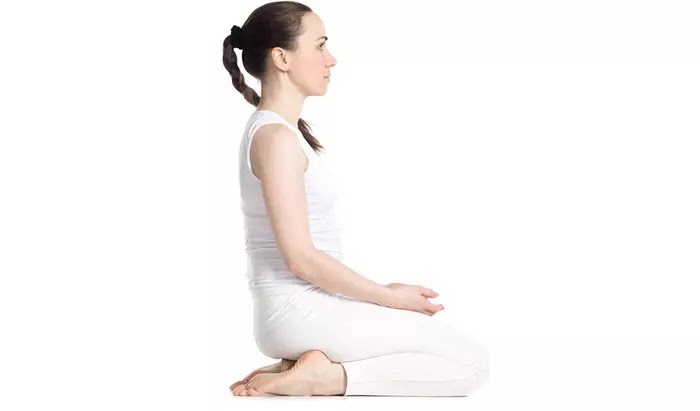
Benefits – This asana is the only asana that can be practiced immediately after a meal. It works on the digestive system and helps to keep the metabolism in check. This asana calms the mind and operates on every area that needs attention.
How To Do It – Place your thighs on your calf muscles as you sit flat on the floor. Focus and breathe. It will be prudent to place a yoga mat or yoga blankets under the shins so that one can spend few minutes in this posture without much discomfort.
***Matsyasana
Benefits – The Matsyasana is a highly beneficial pose in yoga to gain weight. It works on many systems collectively, including the thyroid gland. It regulates an overactive thyroid gland that can also cause weight reduction. It strengthens the digestive, circulatory, reproductive, and cardiovascular systems. The metabolism and nutrient absorption improve, and all the weight loss issues (due to thyroid issues) are addressed and cured over time.
How To Do It – Lie on your back, and then cross your legs in the Padmasana. Gently curve your back such that your head rests on your crown. Feel the curve in the upper back and neck. Hold for a few seconds and release.
*** Sarvangasana
Benefits – A shoulder stand first and foremost works on improving the circulation of blood and oxygen. This asana is an inversion, and therefore, a new lot of blood reaches the inaccessible areas, which gives them a boost of nutrients. All the energy blocks are cleared, and the body is strengthened.
How To Do It – Lie down in the Shavasana. Lift your legs up as you support your hips with your palms. Shift the body weight on the shoulders, and lift your upper body too, as your head and upper back remains on the floor. Hold for a few seconds and release.
***Shavasana
Benefits – This asana completely relaxes the body and allows it to reap the benefits of the workout. It is at this time that the nutrient absorption is enhanced. The body is completely healed.
How To Do It – Lie down in the Shavasana. Lift your legs up as you support your hips with your palms. Shift the body weight on the shoulders, and lift your upper body too, as your head and upper back remains on the floor. Hold for a few minutes and release. It will be safer for the cervical area if the neck and shoulders are supported on wide yoga blankets.
Monday, 20 April 2020
Simple yoga exercise to stretch and strengthen
***Mountain Pose (Tadasana)
In a yoga context, however, there is a lot going on in this position. The heels root down, the muscles of the legs are engaged, the bones are stacked with the shoulders directly over the hips, the shoulder blades slide down the back, and the crown of the head rises. Don't forget to breathe.
***Raised Arms Pose (Urdhva Hastansana)
Stay grounded in the heels and keep your shoulders moving away from your ears at the same time that you reach up through your fingertips. Your gaze can come up to the hands, which can be shoulder's width apart or palms touching.****Lunge Pose
Straighten your legs and move your feet back under your hip before
stepping your left leg to the back of your mat and bending your right
knee for a deep lunge. Try to bring your bent knee directly over your
ankle so your right thigh is parallel to the floor.
Keep the left leg straight and strong with your heel reaching back.
If this is too intense, you can drop your left knee to the mat instead.
Stay five breaths before returning the left foot to the front of your
mat next to the right one. Then repeat the lunge with the left foot
forward and the right leg back.
***Plank Pose
After your second lunge, step the left foot back so that it is next
to the right foot at the back of your mat. This is the classic
preparation for a pushup. Stay here for five breaths while making sure
that your hips do not drop too low or rise too high.
If your elbows tend to hyperextend, micro-bend
them. Bring your knees down if necessary. After five breaths, release
your knees to the mat and come back to sit on your heels, resting for a
moment.
***Head to Knee Pose (Janu Sirsasana)
Come back up to sit and bend your left leg, bringing the sole of the left foot inside your right thigh. Use the same technique described above to deepen the pose using your breath. After five breaths, sit up and switch legs.Saturday, 18 April 2020
Subscribe to:
Posts (Atom)